Analisis de politicas y Revelaciones contables
En esta sección se presentan diversos estudios relacionados al Análisis de Políticas y Revelaciones Contables presentadas por empresas fiscalizadas por la Superintendencia de Valores y Seguros (SVS), entre las que se encuentran las compañías cotizadas en Chile. Para lo anterior, se analizarán los Estados Financieros preparados y presentados bajo Normas Internacionales de Información Financiera (IFRS por su sigla en inglés). Los estudios serán abordados en función de diversas variables de clasificación, entre ellos destacan: Análisis por Áreas Temáticas, Análisis por Sector Económico y Análisis por Índice Bursátil al cual pertenecen las entidades.
Referencias Bibliográficas de Interés
Libros:
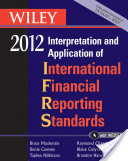
CÓDIGO BAPRC - 001
MacKenzie, B., Coetsee, D., Njikizana, T, Chamboko, R., Colyvas, B., Hanekom B. (2011). Wiley Ifrs 2012: Interpretation and Application of International Financial Reporting Standards.
Reseña
"Wiley IFRS 2012" provides the necessary tools for understanding the IASB standards and offers practical guidance and expertise on how to use and implement them.Covers the most recent International Financial Reporting Standards (IFRS) and IFRIC interpretations. An indispensable guide to IFRS compliance. Provides a complete explanation of all IFRS requirements, coupled with copious illustrations of how to apply the rules in complex, real-world situations. Written by a world-class team of authors active in IFRS consulting, training, working with multinational listed companies, public sector entities and SMEs, this book is an indispensable guide to IFRS compliance.
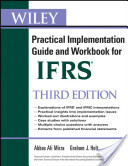
CÓDIGO BAPRC - 002
Abbas, M., Graham, H., Liesel, K. (2011). Wiley IFRS: Practical Implementation Guide and Workbook
Reseña
No Disponible
Artículos Académicos
CÓDIGO: BAPRC - 003
Hodgdon, C. Tondkar, R., Harless, D. and Adhikari, A. (2008). "Compliance with IFRSdisclosure requirements and individual analysts’ forecast errors". Journal of International Accounting, Auditing and Taxation, Volume 17, Issue 1, Pages 1–13
Abstract
We investigate the relationship between analysts’ earnings forecast errors and firm compliance with the disclosure requirements of International Financial Reporting Standards (IFRS). Using a comprehensive disclosure index of selected IFRS for which previous research has indicated significant noncompliance, we develop an unweighted and an innovative weighted measure of IFRSdisclosure compliance. We document that forecast error is negatively related to IFRS compliance, and that the magnitude of this effect is larger when controlling for analyst fixed effects. Our findings suggest that compliance with the disclosure requirements of IFRS reduces information asymmetry and enhances the ability of financial analysts to provide more accurate forecasts. Our findings also support the viewpoint that the extent of compliance with accounting standards is as important as the standards themselves. Our results are robust to alternative model specifications.
Disponible en:
http://www.sciencedirect.com/science/article/pii/S1061951808000049
CÓDIGO: BAPRC - 004
Horton, J., Serafeim, G., Serafeim, I. (2012). "Does Mandatory IFRS Adoption Improve the Information Environment?". Contemporary Accounting Research, DOI: 10.1111/j.1911-3846.2012.01159.x
Abstract
More than 120 countries require or permit the use of International Financial Reporting Standards (‘IFRS’) by publicly listed companies on the basis of higher information quality and accounting comparability from IFRS application. However, the empirical evidence about these presumed benefits are often conflicting and fail to separate between information quality and comparability. In this paper we examine the effect of mandatory IFRS adoption on firms’ information environment. We find that after mandatory IFRS adoption consensus forecast errors decrease for firms that mandatorily adopt IFRS relative to forecast errors of other firms. We also find decreasing forecast errors for voluntary adopters, but this effect is smaller and not robust. Moreover, we show that the magnitude of the forecast errors decrease is associated with the firm-specific differences between local GAAP and IFRS. This finding suggests that it is IFRS adoption rather than a correlated unobservable factor that is causing forecast errors to decrease. Exploiting individual analyst level data and isolating settings where analysts would benefit more from either increased comparability or higher quality information, we document that the improvement in the information environment is driven both by information and comparability effects. These results suggest that mandatory IFRS adoption has improved the quality of information intermediation in capital markets and as a result firms’ information environment by increasing both information quality and accounting comparability.
Disponible en:
http://onlinelibrary.wiley.com/doi/10.1111/j.1911-3846.2012.01159.x/abstract
CÓDIGO: BAPRC - 005
Iatridis, G. (2010). "International Financial Reporting Standards and the quality of financial statement information". International Review of Financial Analysis, Volume 19, Issue 3, June 2010, Pages 193–204
Abstract
This study focuses on the adoption of the International Financial Reporting Standards (IFRSs) in the UK and concentrates in the switch from the UK GAAP to IFRSs. The study seeks to determine whether IFRS adoption leads to higher quality accounting numbers. By examining company accounting measures reported under the UK GAAP and IFRSs, the study investigates the earnings management potential under IFRSs. The paper also studies the value relevance of IFRS-based financial statement information. The study indicates that the implementation of IFRSs generally reinforces accounting quality. The findings show that the implementation of IFRSs reduces the scope for earnings management, is related to more timely loss recognition and leads to more value relevant accounting measures. This suggests that less information asymmetry and earnings manipulation would lead to the disclosure of informative and higher quality accounting information and would therefore assist investors in making informed and unbiased judgements.
Disponible en:
http://www.sciencedirect.com/science/article/pii/S1057521910000232
CÓDIGO: BAPRC - 006
Iatridis, G. (2008). "Accounting disclosure and firms' financial attributes: Evidence from the UK stock market". International Review of Financial Analysis, Volume 17, Issue 2, 2008, Pages 219–241
Abstract
This paper focuses on the disclosure of accounting information in the financial statements of UK firms. The primary objective of the study is to analyse the financial characteristics of firms that provide extensive disclosures, and assess the financial impact of their motives, such as for example the need to raise equity finance. The study examines the financial attributes of firms that disclose information about key accounting issues including risk exposure, changes in accounting policies, use of international financial reporting standards and hedging practices. Firms are inclined to disclose accounting information in order to assure the market participants that their accounting policies are consistent with the accounting regulation and meet the information needs of their stakeholders. The study shows that in order to raise finance in the capital and debt markets, firms tend to provide extensive accounting disclosures. Firms that provide informative accounting disclosures appear to display higher size, growth and leverage measures. The findings also show that the disclosure of sensitive accounting information has not adversely affected firms' profitability. In fact, firms that provide detailed accounting disclosures tend to exhibit higher profitability. The implementation of international financial reporting standards enhances the quality and the comparability of financial statements; hence it promotes consistency and reliability in financial reporting and facilitates companies in raising capital internationally.
Disponible en:
http://www.sciencedirect.com/science/article/pii/S1057521906000561
CÓDIGO: BAPRC - 007
Kvaal, E., and Nobes, C. (2010). "International differences in IFRS policy choice: A research note". Accounting and Business Research, Volume 40, Issue 2, pp. 173-187.
Abstract
Building on literature that suggests motives and opportunities for national versions of IFRS practice, we examine whether there are systematic differences in IFRS accounting policies between countries. Using information from the annual reports of companies in the blue chip indices of the largest five stock markets that use IFRS, we reject a null hypothesis that IFRS practice is the same across countries. For 16 accounting policy issues, we find instead significant evidence that pre‐ IFRS national practice continues where this is allowed within IFRS. By this, we document the existence of national patterns of accounting within IFRS. We also point out some policy implications that arise from our findings.
Disponible en:
http://www.tandfonline.com/doi/abs/10.1080/00014788.2010.9663390
CÓDIGO: BAPRC - 008
Texeira, P., and Couo, R. (2008). "The transition to IFRS: disclosures by Portuguese listed companies". Working paper available at http://ideas.repec.org/p/por/fepwps/285.html
Abstract
In the context of the CESR and of the Portuguese market regulator recommendations regarding the disclosure of the impacts of the transition to IFRS, this paper analyses the content of those disclosures by Portuguese listed companies. We found a high degree of variability among the disclosure either regarding the qualitative (narrative explanations of transition) or quantitative (reconciliations) disclosures. The results show that the objective of comparability, relevance and understandability stated in CESR’s recommendation were not achieved. Regarding accounting changes, the analysis shows that the reported impacts by companies confirmed expectations based on prior de jure studies on major impacts of changing from Portuguese GAAP to IFRS; these major impacts regard the recognition of intangibles, the accounting treatment of goodwill and financial instruments. Finally, Gray’s (1980) “conservatism” index was computed using the reconciliated profits to IFRS reported by companies. This analysis shows that Portuguese standards are more conservative than IFRS. This study is relevant to several parties: to the market regulators and policy makers in predicting the level of compliance with IFRS and calling attention for the importance of enforcement mechanisms; to the preparers, auditors and users in identifying the most problematic areas of implementation of IFRS.
Disponible en:
http://ideas.repec.org/p/por/fepwps/285.html